



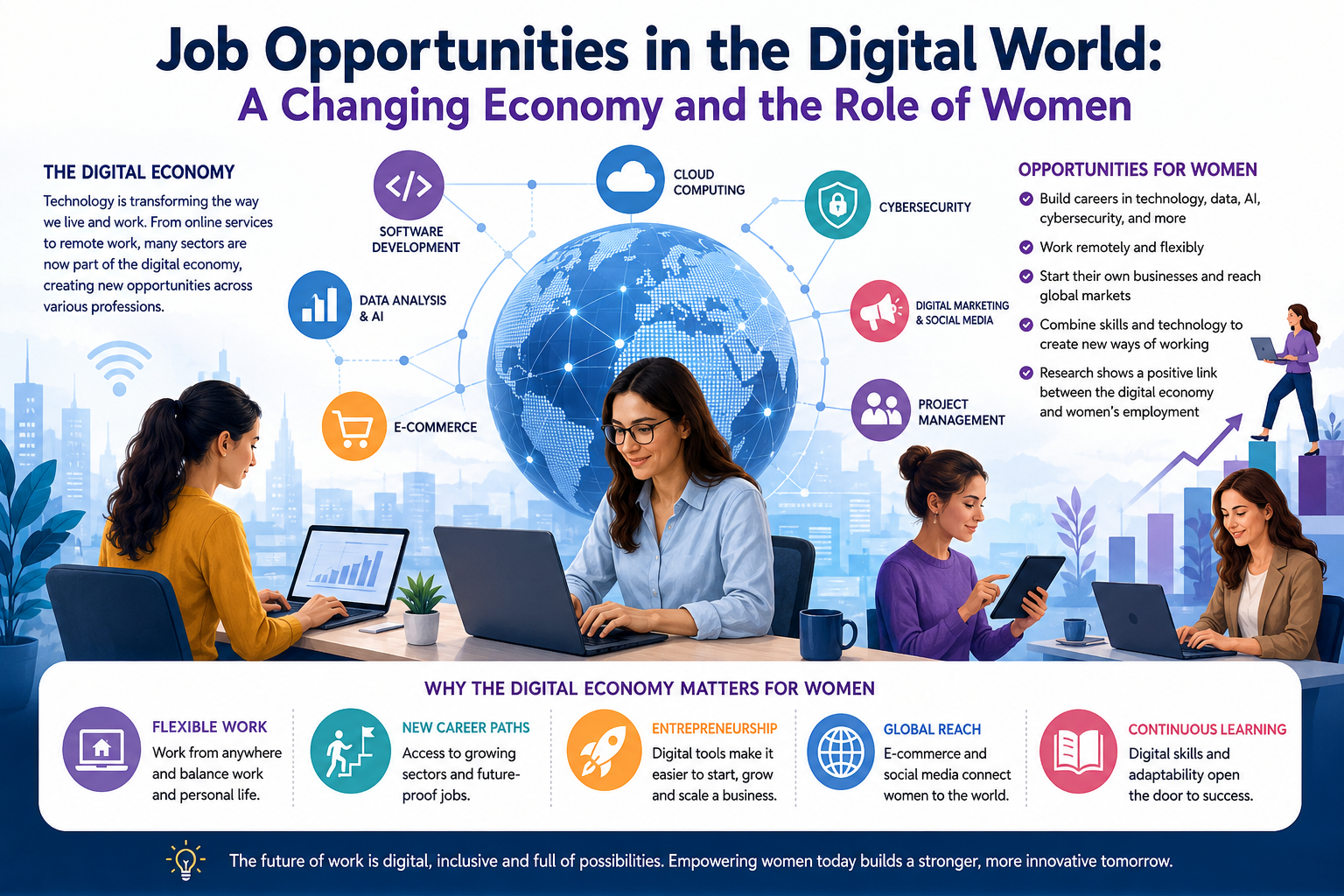
One of the most visible results of this change is the rise of new jobs. Software development, data analysis, cloud computing, cybersecurity, and UX/UI design are among the fields directly linked to the digital economy. At the same time, digital marketing, social media management, content creation, e-commerce, digital project management, and technology consulting are also becoming more important. Coşkun’s (2026) study shows that digital change not only creates new jobs but also changes the tasks and skills needed in existing jobs. Data and artificial intelligence are especially important areas for the future of work. As companies use large amounts of data to make decisions, the need for data analysts, data scientists, and business intelligence experts is growing.
As Gücenmez’s (2023) study shows, digital change is a broad process that affects the structure of labor markets and economic relations. Therefore, instead of some jobs completely disappearing, changes in the tasks and skills within jobs may become more important. In the future, it will not be enough to simply use technology; people will also need to recognize new opportunities and take an active role in this change.
The digital economy also offers new career and work opportunities for women. Women can build careers in technical fields such as software, data science, artificial intelligence, cybersecurity, and game development, as well as in digital marketing, e-commerce, content creation, project management, and technology entrepreneurship. The digital world allows women to combine their different skills with technology and create new ways of working. Research by Ahmad et al. (2024), which examines different countries, also shows a positive link between the growth of the digital economy and women’s employment. In particular, digital tools such as internet use, broadband connections, and mobile technologies are linked to higher female employment.
Another important opportunity for women is remote and flexible work. Digital technologies allow work to be done without being tied to a physical office, creating new options in areas such as online education, consulting, design, software, digital marketing, and content creation. Digital change also creates new opportunities for women to start their own businesses. E-commerce and social media make it easier to reach large audiences, while digital marketing tools help women entrepreneurs build their brands and reach new markets.
In conclusion, digital change is reshaping the world of work and creating new career paths across many fields. For women, the digital economy can offer more flexible work, new career options, and opportunities for entrepreneurship. As technology continues to change, gaining digital skills and being able to adapt to new opportunities will become increasingly important.
References
Ahmad, R., Sharif, F., Ahmad, S., Gul, A., & Abdirasulova, Z. A. (2024). Does the digital economy improve female employment? A cross-country panel data analysis. Heliyon, 10(13), e33535. https://doi.org/10.1016/j.heliyon.2024.e33535
Coşkun, C. C. (2026). Dijital dünya: Yeni meslekler ve beceriler. Süleyman Demirel Üniversitesi İnsan Kaynakları Yönetimi Dergisi, 5(1), 46–55. https://izlik.org/JA26EA78UF
Gücenmez, T. (2023). Türkiye’de dijital dönüşümün iş gücü piyasalarına etkisi ve gelir dağılımı ilişkisi. Kahramanmaraş Sütçü İmam Üniversitesi Sosyal Bilimler Dergisi, 20(3), 995–1005. https://doi.org/10.33437/ksusbd.1361092
Grau-Sarabia, M., & Fuster-Morell, M. (2021). Gender approaches in the study of the digital economy: A systematic literature review. Humanities and Social Sciences Communications, 8, Article 201. https://doi.org/10.1057/s41599-021-00875-x